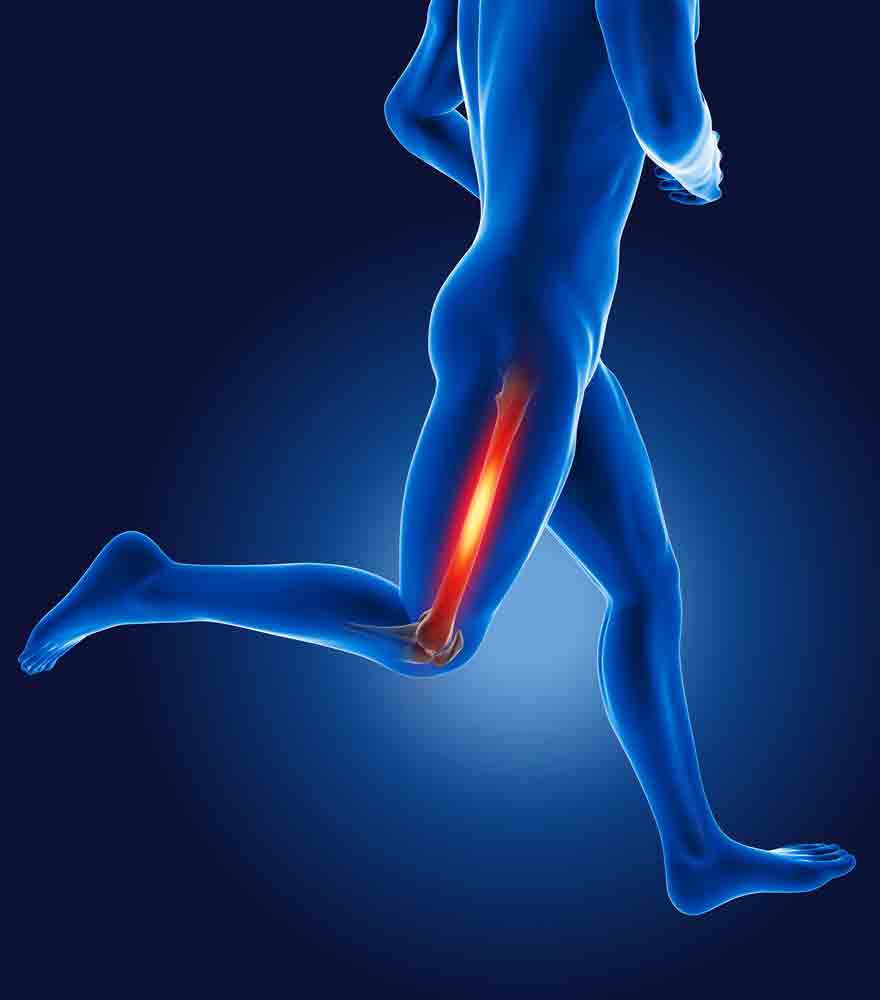
Many people experience stiffness in their hips after sitting. This can be due to a number of factors, including injury and age-related degeneration. The severity of this particular symptom can range from a mild inconvenience to crippling dysfunction. If you’re dealing with aches, stiffness and other symptoms in your hips for any period of time, you should work closely with a qualified medical professional to reach a diagnosis and develop a treatment plan.
Common causes for this type of stiffness in your hips include muscle strains, arthritis and bursitis. In nearly any situation, working with a physical therapist to overcome this and other hip-related symptoms can be highly effective in helping you regain a higher level of comfort and functioning.
Steps to assess hip pain and stiffness
When you first meet with a physical therapist, they will attempt to understand the underlying causes that are leading to the development of hip stiffness. Physical therapists can use a number of techniques to identify issues in your posture and biomechanics that could be at the root of your pain. Typical evaluative steps include:
Reviewing health and treatment history.
Discussing specific symptoms, daily activities and triggers for pain, such as sitting.
Performing posture and movement tests to assess biomechanics.
Performing a hands-on examination to isolate painful spots and movements.
Using this information, your therapist can develop a personalized treatment plan that involves therapeutic exercise, manual therapy, stretches and movement training to address your hip stiffness. We can also provide helpful education on lifestyle changes, including posture improvement and regular exercise, that can help promote the long-term health of your hips.
Find the care you deserve at SOL PT
When you come to our beautiful clinic in Oakland, you can expect the highest level of expertise and compassionate care from our clinicians. No matter what the cause of your hip stiffness is, we’ll be happy to work with you personally to create an individualized treatment plan. We know that seeking relief can sometimes be intimidating, which is why we’re committed to making your treatment process as relaxing and stress-free as possible.
To learn more, contact us today. We’ll be happy to help you schedule your initial appointment with one of our therapists.
Have you woken up one day to discover the presence of hip pain that just doesn’t seem to want to go away? You’re certain you haven’t injured yourself in any falls or physical activity, but the pain is real. So, what’s causing it?
Well, hip pain can be related to several different causes. Take a look below at some of the common reasons people have sudden hip pain without an injury.
Common causes of sudden hip pain without an injury
Bursitis — The bursae are small sacs of fluid that sit between the tendons and the bones near your joints. Their job is to prevent the tendons from rubbing against the joints, which can cause inflammation in the tendons. However, the bursae themselves can become inflamed if subject to overexertion or prolonged strain from sitting. This is known as bursitis, and it’s a painful condition to have that can occur suddenly without injury.
Tendinitis — Overexertion of the hips in physical activity can cause the tendons to become inflamed. This is known as tendinitis. When this happens, you might experience a tender, burning type of pain in your tendons when attempting to use the hips.
Strained muscles — Overexertion of the hips can also cause one of the muscles in the hip or groin area to become strained. A strained muscle is a muscle that has been stretched too far or been torn. When this happens to one of the many muscles around your hips, it will be painful to try to move your hips.
Arthritis — Arthritis builds up slowly over time for many people, but its symptoms can seemingly appear out of the blue for some. If you have sudden hip pain and there are no issues with your muscles, tendons or bursae, it may be because of inflammation in the hip joints themselves. This causes the cartilage to break down, which creates friction when using the hip joint that is painful and limits your range of motion.
Visit Advent Physical Therapy for sudden hip pain treatment
Are you tired of your sudden hip pain limiting your ability to move around comfortably? It’s time to talk to a physical therapist at Advent Physical Therapy about the natural treatments we use that can help you. Contact our team today for more information about sudden hip pain when you have no injuries or to schedule an initial appointment.
Your home exercise program (HEP) is a custom curated program that is meant to be an extension of your rehabilitation process, outside of our outpatient setting. It is a crucial part of your recovery, and here is why.
“Why do I have to do these exercises at home if I’m already doing them here with you?”
This is one of the most common questions
asked by patients. Physical therapists set up an exercise plan for you to
follow to help increase your strength, flexibility and mobility. These
exercises are designed to help you become free of the aches and pains that
brought you to physical therapy in the first place. On average, you’ll only see
your physical therapist 2-3 hours a week. That is not a lot of time to correct
a dysfunction or condition that has been nagging you for months or even years.
The home exercise program (HEP) is an essential part to your recovery. Home
exercises help you maintain the therapeutic gains made during your physical
therapy sessions. By keeping up with the exercises at home, it greatly
decreases your chances of regressing back to your prior level of dysfunction. It’s
like a two part equation for your recovery. Compare it to trying to live a
healthier life style with diet and exercise. Both are important in order see
significant changes in your health. If you increase your physical activity but
don’t change your diet, you may not get the changes you’d like to see and vice
versa. It takes both parts of the equation to make noticeable gains. If you
maintain your physical therapy appointments and your home exercise plan, you
will see the changes you want for your condition.
“The exercises are uncomfortable and make me sore.”
Another common phrase we hear. It can be
expected for exercises to make you feel a little uncomfortable and sore during
or after they are performed. The soreness you feel should be muscular in
nature. If you feel it in your joints or bones, bring it to your therapist’s
attention. If at any point the exercises are causing you sharp or intense pain,
discontinue the exercise. Any pain
associated with the exercises should be discussed with your physical therapy
team because it is our intent for you to feel better when you leave, not worse.
The team picks exercises specific to the impairments you present with that
typically are effective at remediating them but not everyone is created equal
so each person may feel the exercises differently. The exercises should not inhibit your day to
day activities. If you performed the exercises and cannot move the next day,
chances are you went over board and did too much or you may not be doing the
exercises correctly. If this is the case, bring it to your therapist’s
attention during your next session. They will be able to modify, correct or
prescribe a different exercise so you don’t have any excess discomfort.
“Do I have to keep doing these exercises now that I’m all better?”
At the end of your therapy session your physical therapist will likely send you home with an exercise plan to continue with after you have finished your prescribed treatment plan. These are to help you maintain and prevent the injury from returning. It’s not uncommon for people to return to physical therapy for the same issue they came in for in the first place. Because you are feeling better, you tend to not think about doing the exercises, but in most cases, people fall back into their old movement patterns and postures that increase their likelihood of re-injury.
It has been estimated that about 35% of patients comply with their home exercise programs. Several studies have attributed this low compliance rate to lack of time, discomfort when performing the exercises, or not understanding the importance or purpose of the home exercises. If time is the issue, know that some of your simple exercises can be performed while doing everyday things like watching TV, doing simple chores, sitting at your work desk or while in the car. For more complicated exercises, try to make the time to fit it into your daily routine. If you can’t complete all the exercises at once, it’s ok! Break them up throughout the course of the day. It’s important that you just complete them.
When discomfort or an incomplete understanding of the exercises is limiting you from completing the home exercise plan, speak to your therapist and they will be able to clear up any confusion you may have about the exercises. They will be able to tell you what you should feel when performing the exercises.
If you are having any pain or discomfort that just doesn’t seem to be going away, take advantage of our complimentary pain consultation by calling any of our clinics. You’ll be able to talk to our highly skilled physical therapists and see if physical therapy will benefit you and your pain.
Both the hips and knees are areas in the body where several muscles, tendons, and joints are joined together to help you achieve complex movement. If there is damage and subsequent pain in these areas, it can be difficult to perform daily activities. There are several specific ways that physical therapy can help relieve hip and knee pain. Call SOL Physical Therapy office to find out how a trained physical therapist can help you relieve the pain in your hips and knees!
Common Hip and Knee Conditions
There are several specific conditions that often affect the knees and hips. These conditions can occur due to repetitive motion, traumatic injury, or chronic disease.
Arthritis — Arthritis is a condition that involves inflammation of tissues that surround the joints. This condition can cause knee and hip pain. A physical therapist can teach you correct posture and proper movement techniques to protect your joints.
Strains & Sprains — Strains happen when a muscle or tendon is stretched excessively or torn. A sprain is a stretched or torn ligament. Ligaments may even rupture, causing bruising, pain and limited mobility. A physical therapist can help you recover more quickly while showing you exercise techniques to reduce pain.
Meniscus Tears — This is one of the most common knee injuries people experience. A torn meniscus can cause stiffness, swelling, and varying degrees of pain. This condition could be the result of a sudden injury or repetitive motions. You’re at higher risk if you’re engaging in aggressive pivoting and twisting of your legs. A physical therapist can provide non-surgical treatment for a torn meniscus.
Bursitis — Bursitis occurs when a small sac of fluid known as the bursa becomes inflamed. This is often caused by overuse or repetitive injuries. Bursitis can occur in a variety of locations in the body including the knees and hips. Physical therapy can aid in recovery and the reduction of pain.
How Physical Therapy Can Help
No matter what condition you have, a physical therapy program can help relieve your pain. Your physical therapist will evaluate your condition and create an individualized program to meet your specific needs. Range of motion and strength measurements may be taken during the physical therapy evaluation. The following are several treatment methods a physical therapist may use to help limit or relieve both knee and hip pain.
Manual Physical Therapy — A physical therapist might use several hands-on techniques to reduce pain in your hips and knees. This could include stretching exercises or a variety of massage techniques.
Heat & Ice Physical Therapy — Heat is often used during physical therapy to help increase mobility and lessen pain. A physical therapist may also use ice to reduce swelling and inflammation.
Ultrasound Therapy — A physical therapist may use ultrasound to provide deep heating in the tissues. A trained physical therapist can also more easily identify problem areas by using ultrasound.
Home Exercises — A physical therapist can teach you exercises to do at home to alleviate hip and knee pain. Physical therapy techniques can be incorporated into a home exercise program that can become part of your daily routine.
Physical therapy treatment may be able to help you remain pain-free and as active as possible. A physical therapist can create a customized program to treat your particular condition.
Contact our Oakland, CA offices to schedule an evaluation with an experienced physical therapist. Find out today how physical therapy can reduce or even eliminate your knee or hip pain!
If you are, you are among the majority. That’s right, around 80% of the population deals with back pain at some point in their life. If you fall into this category, you know the annoyance that is caused by frequent back pain – it can interfere with every facet of life. It can make bending over difficult and cause you to become irritable, making it hard for you to participate as you once did in social activities. In essence, it takes away the life you once had and leaves you with one void of the joy you once experienced. The solution to this problem is to understand what causes back pain in the first place. Do you know the culprit could be your thighs and/or hips?
How Does Your Thigh or Hip Strength Correlate With Back Pain?
It might come as a surprise to you, but poor thigh and hip strength often leads to back pain. As you age, your thigh and hip muscles—more specifically the external hip rotators, gluteus muscles and the quadriceps– naturally weaken. This is caused by various factors, such as sitting for long periods of time, along with age. As a result of this weakness, the support your spine once enjoyed is lessened. This in turn makes it harder for you to do simple tasks, like bending over and picking something up. Put simply, it means you don’t have the correct amount of strength in the right places. Consequently, when you bend down repetitively on a daily basis in your weakened state, this will lead to more stress on your back, which causes your pain to worsen.
How to Know If Your Strength is Located in the Right Places:
First of all, do the following:
Face a mirror.
Make sure your head is facing forward and your spine remains straight.
Squat down, by sticking your buttocks outward.
When completing these actions, notice the following:
Are you able to squat as you stick out your buttocks?
Do you feel discomfort or pressure in your knees?
Does one or both of your knees turn inwards?
If you answered yes to the questions listed above, you likely have problems with the strength and mobility of your pelvis, hips and thighs. These issues could be the culprit behind not only your back pain, but any knee pain you might have as well.
How to Strengthen Your Hip and Thigh Muscles:
The simple solution to the problem of back pain would seem to be for you to strengthen your hip and thigh muscles. Of course, that’s easier said than done. That’s where SOL Physical Therapy can truly help. When you choose us for your treatment, we begin by thoroughly analyzing the way you bend and walk. We also make note of how strong your thighs and smaller hip muscles are at the present time. After this assessment, we can pinpoint the areas of your body that need work. The next step will be creating a treatment plan that is specifically designed to help you quickly build strength, and as a result, improve your spinal stability, muscle coordination and eliminate or reduce your back pain.
For more information on SOL Physical Therapy’s programs to relieve back pain, call us today. We are happy to create a treatment plan that will have you pain free as quickly as possible. Don’t despair; there is hope for life free of back pain.
Of all of the injuries that can beset runners, the iliotibial band friction syndrome (ITBFS) is by far one of the most common and frustrating. A typical scenario for ITBFS is in a relatively novice athlete who, just when they are really getting accustomed to training on a regular basis, begins to experience lateral knee pain during a run. The pain becomes severe and forces cessation of the activity. By the next day the pain is gone. However, each time that the athlete tries to run again, the pain returns. Discouraged and downtrodden, the athlete is liable to give up. And in too many cases, this is exactly what happens. Fortunately though, with a little bit of insight and preventative steps, ITBS can be an experience that not everyone needs to have. Better yet, when ITBS does become a problem, there are solutions.
This post will cover the anatomy of the ITB, several of the proposed theories behind why ITBFS develops, measures that can be undertaken to prevent it in the first place and treatment options once the problem has taken root.
The IT Band
The iliotibial band (ITB) is a dense, fibrous band originating from the pelvic bone and passing down the outer third of the thigh. At the level of the hip, muscle fibers from the gluteus maximus (GM) and Tensor fascia lata (TFL) merge with the ITB. As the ITB continues down the outside of the leg and approaches the knee joint, it passes over a protuberance on the outer aspect of the femur (thigh bone), the lateral femoral epicondyle (LFE). A thin layer of fatty tissue is located between the ITT and LFE.
The IT Band Friction Syndrome
The ITBFS afflicts runners most commonly, though cyclists may experience it as well. The main symptom of ITBFS is a sharp pain on the outer aspect of the knee that can radiate into the outer thigh or calf. While pain is localized along the lateral knee, it also can include the hip. Pain is worse with downhill running, becomes worse with activity after a pain-free start and is more pronounced shortly after the foot contacts the ground surface. Most individuals experience pain only during activities; however, pain with walking is common as the syndrome progresses.
The most commonly accepted theory of how ITBFS develops posits that the ITB slides back and forth over the LFE as the knee is bent beyond a certain point (about 20 degrees) and then straightened again. Various biomechanical factors are hypothesized to increase this friction, including weak hip abductors (the muscles responsible for pulling the legs apart), a tight ITB, the angle of the knee and the way in which the foot strikes the ground.
Prevention
Preventing ITBFS is preferable to treating it once it is established. Fortunately, by following some simple preventative measures, it is possible to have a healthy running career without ever having to deal with ITBFS.
Proper footwear
Wearing proper, supportive running shoes, changed at regular intervals. A running shoe loses about 50 percent of its shock absorptive capacity after around 300 miles. Keeping shoes for too long increases the risk of ITBFS and other injuries.
Strengthen the hip abductors
Incorporating specific strengthening exercises for the gluteals can be an important preventative measure.
Increase running volume and pace in a measured fashion
Doing too much too soon is a sure way to incur running injuries including ITBFS. Volume should increase no more than 5-10 percent per week and longer runs should be done at slower pace than shorter runs.
Choice of running surface
Running on concrete or cambered surfaces increases the likelihood of ITBFS. These should be avoided.
Treatment
The treatment of ITBFS may be thought of as happening in two stages: acute and chronic.
The acute stage of therapy is aimed at reducing the inflammation in and around the ITB. This will reduce pain and any associated swelling. Non-steroidal anti-inflammatory drugs (NSAIDs) such as ibuprofen and naproxen are very useful in this regard. These drugs should be avoided by those with a history of kidney issues or peptic ulcers but otherwise are considered quite safe. The application of ice to the affected area may also provide some anti-inflammatory effects and provide symptom relief. The final element of the acute phase is a complete cessation of running until such time as the activity may be undertaken without pain (usually one to two weeks).
The chronic phase of treatment is aimed at alleviating those factors that led to the problem in the first place. This includes all of the preventative measures listed above. In addition, attempts can be made at stretching the IT band at the level of the Tensor fascia lata at the level of the hip—the one place where the IT Band is amenable to lengthening.
An example of a specific stretch for this purpose is described here:
Standing upright, cross the right foot in front of the left foot.
Bend forward at the hips as far as is comfortable.
Reach with both arms to the right and thrust the hips out to the left.
You should feel a stretch over the left hip if you are doing this correctly.
Reverse legs and directions to stretch TFL on the right.
In almost all case, ITBFS is self limited and no more than a painful nuisance. Left untreated though, ITBFS may become chronic and more severe eventually impacting daily activities. In the worst cases, surgery may become an option with excision of the bursal sac that overlies the LFE under the ITB. This treatment is reserved for the most severe cases though, thankfully encountered only very rarely.
Before SOLPT: “Almost constant pain-could not perform normal activities.”
After SOLPT: “Much better. I also feel empowered to recognize/fix the misalignment should it happen again. Knowing what exercises will help keep me from re-injury is invaluable.” -L.K.
When Was Your Appointment?
We recently changed bill pay providers. Please click the button for the date of your appointment to be directed to the correct online payment portal.